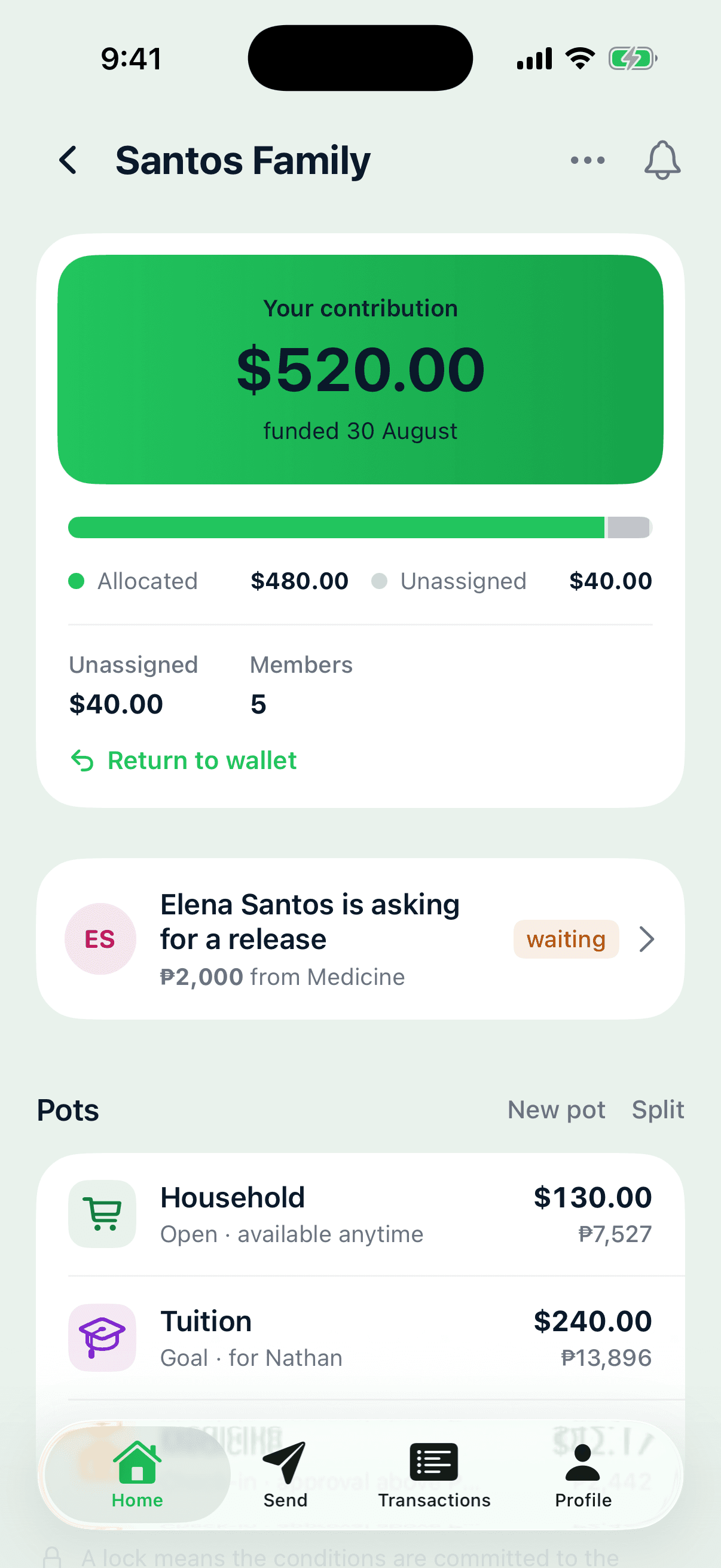
The transfer used to be the end of the story: money lands, and everyone goes back to guessing what's left and texting to ask. Family Wallet is what we built instead, a shared space with pots for what the money is actually for, roles for who can do what, and a release that makes the money someone's the moment it happens. It is not a mockup. It runs in the alpha, on real accounts, today.
Founding a family, inviting members, splitting a contribution into pots, asking for a release and approving it all work end to end on the current alpha build. What follows is what it actually does, not what we plan for it to do.


Someone has to be able to found the family and invite people into it without also getting a say over everyone else's money. That split is built in, not bolted on: an admin runs the family, but the money in a pot stays under the rules of the pot, not under whoever set the family up.
Founds the family, invites and removes members, renames pots. No standing access to money that isn't theirs, the same as everyone else.
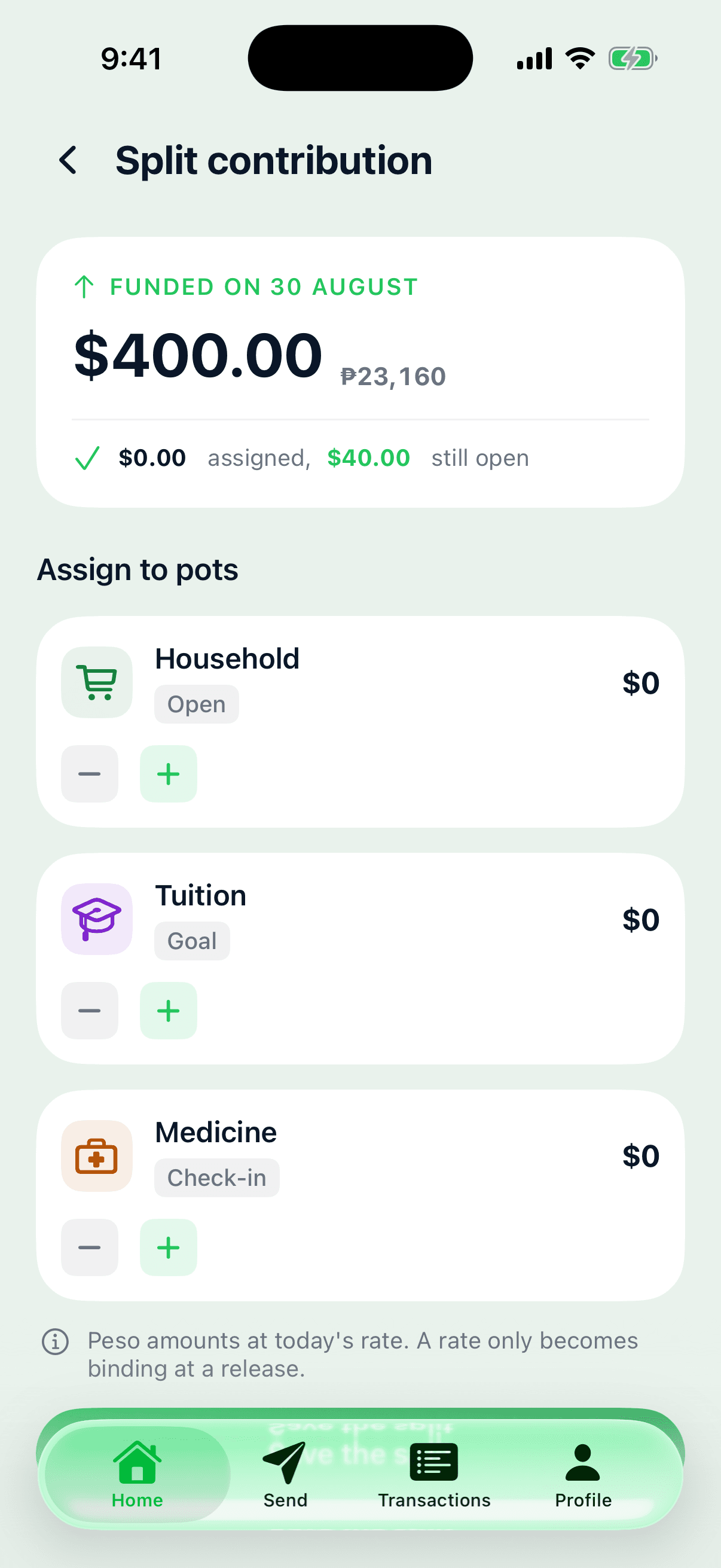
Puts money into pots. A contribution reserves money in their own wallet first, then it gets allocated to a pot, in the open or against a check-in or a goal.
Releases money out of a pot, or declines with a reason. Sees every open request the moment it comes in, in-app and by push once it's asked for.
Gets a pot of their own with a guardian attached. The guardian sees it and acts on it; a release from a child's pot lands on the guardian's account, not a bank account the child doesn't have.
Inviting someone doesn't require them to already have Family Wallet turned on, or even the app installed. The admin sends a link (or a deep link straight into the app), the invited person opens a public landing page with the install steps, and joining the family is what switches the feature on for them. Open invitations stay visible and can be revoked; unused ones expire after seven days and only work once.
A pot isn't just a balance with a label. It carries a rule for how money moves out of it, so "household" behaves differently from a fixed target like tuition.
No threshold, no date. Money goes in, an approver releases it when someone asks. Good for the pots that don't have a fixed shape, like household spending.
Set a threshold. A release above it needs an approver's say-so; below it, it can move on its own. Built for the pots where small amounts are routine and larger ones aren't.
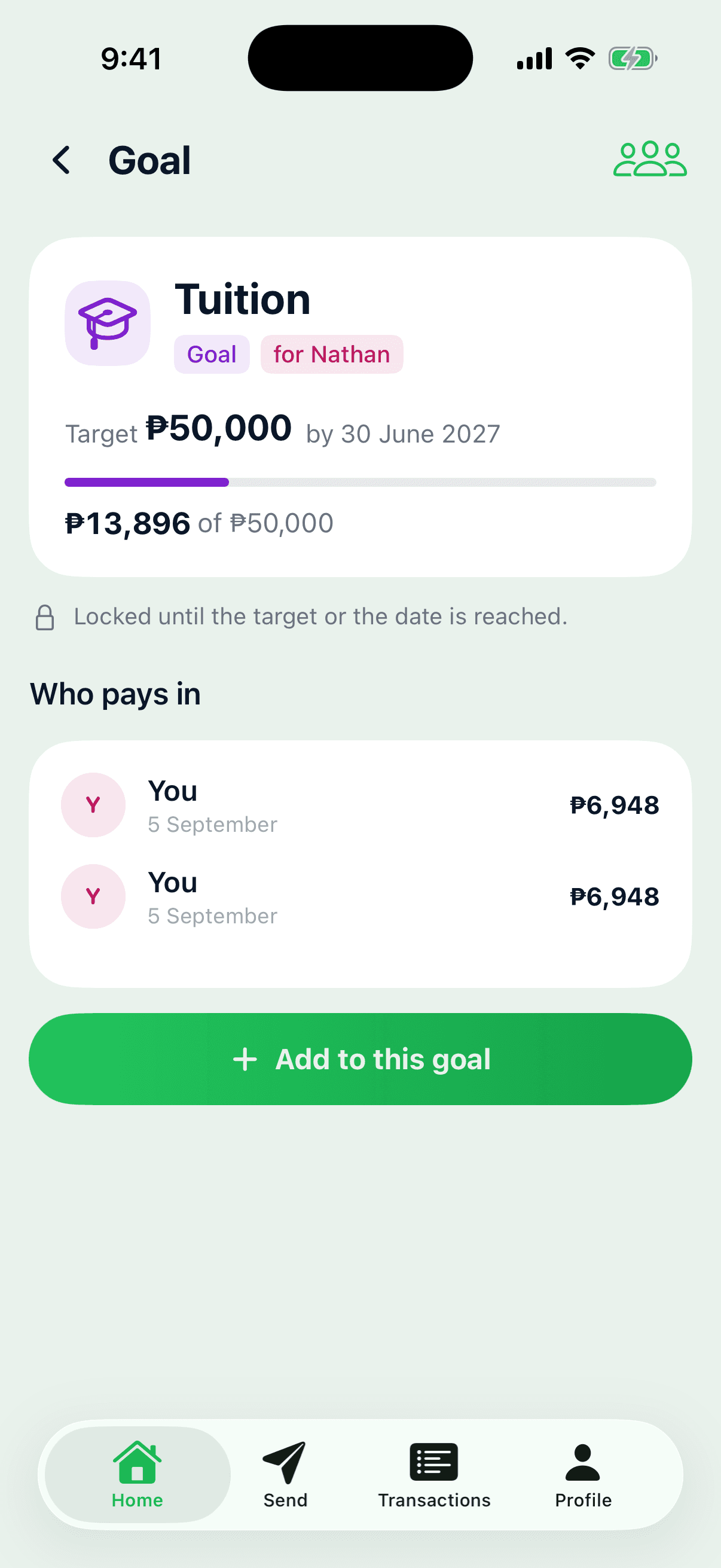
A target amount and a date. Contributions allocate toward it, the pot shows progress and locks once the target is reached or the date passes, matching what the pot was actually saved for.
Allocate to a pot, take an allocation back, or pull an unallocated balance back into your own wallet. Nothing sits stuck in the wrong place.
One endpoint handles a release, and it only ever goes three ways: released straight away, held for an approver to look at, or declined with a reason attached. A request can carry a note explaining what it's for, and it can be withdrawn before anyone acts on it. Left untouched, it expires after seven days rather than sitting open forever.
Pots are funded in euros but spent in pesos, so the peso amount gets re-priced at the moment of release, not locked in when the request was made. If the rate has moved more than 2% since the request went in, the app asks for confirmation before it lets the release go through.
Family Wallet doesn't hand everyone the same full view and trust people not to look too closely. What a member sees is cut down to their role on the server before it ever reaches their phone, not hidden in the interface and still sitting in the response. A contributor sees the pots and the activity relevant to them; there is no quiet way to read more than that.
No receipts or photos attached to a release, no separate bank account per savings goal, no contributions from people without a PisoLinked account of their own, and no daily or monthly spending limits beyond the pot rules above. We'd rather say what Family Wallet does today than promise what it will do next.